The marigolds show up in the grocery stores at the end of October, buckets of them by the door, orange as a road cone, smelling like the inside of a pumpkin and something sharper underneath. Cempasúchil. In a lot of the houses in this town, maybe half, somebody knows exactly what to do with them: pull the petals and lay a path from the front door to a table, and on the table set a photograph, a candle, a glass of water, a plate of the food the person liked, a loaf of pan de muerto with the bone shapes on top, a bottle of whatever they drank, a pack of the cigarettes they were told to quit. Sugar skulls with names written across the forehead in icing. Paper cut into lace and hung so it moves in the draft. An ofrenda is not a shrine. It is a place setting. On the first and second of November the door is open and the dead are expected for dinner, and the smell of marigolds is how they find the house.
The other half of town does it differently, or does it quietly, or does it with a folding chair and a pair of garden shears at the cemetery on a Saturday. All Saints on the first, All Souls on the second, the same two days by a different name. Somebody drives out with a trunk full of silk flowers and a jug of water and a rag, and cleans the stone, and stands there for a while not saying much. There are cemeteries in this part of the county that are older than the refinery, that were here when the land was ranch and marsh and there was no channel and no reason for one, and in the older sections the stones are worn to the point that you have to run a finger in the letters to read them. Some are in Spanish. Some have a small symbol cut into them that tells you the trade. Some are children.
This is a week, in other words, when the whole town is doing the same thing in two languages, and the thing is remembering. It is a good week to ask what a town actually owes the people who built it, and what remembering has to do with paying it.
Start with the plain physics, because in this town the plain physics is always underneath. Nothing is destroyed, and that is chemistry before it is comfort. A chemical reaction rearranges atoms and does not make or unmake them, and the body is chemistry, and when a body is gone it is gone the way a barrel of crude is gone after the refinery is done with it: not gone, sorted. Every breath a person ever took out was carbon leaving, a little at a time, into the air over the bay, where the plankton took it and the fish took the plankton and the pelicans took the fish. What is left at the end goes the same way, only slower. The carbon in the man who ran a still in 1925 is in the air and the bay and the grass and, some of it, in the people at the table. This is true of everyone who ever lived here, the ones on the stones and the ones under no stone at all: the crews who dug the channel, whose names are not on it, the drillers on the boardwalks in the creek, the ones who ran the units through the war making the fuel for the planes, the ones who lived in Brownwood before the water took the streets. Their atoms have not left. The marigold path to the door is, chemically, a formality. They were already inside.
But atoms are not what we mean by remembering, and everybody knows it. What an ofrenda does, and what the rag on the headstone does, is hold a particular arrangement in mind after the arrangement itself has come apart. What you loved was the pattern the carbon was in for a while, the way a flame is the shape the gas makes while it burns and not the gas. When the flame goes out the gas is still there and the shape is not, and the shape was the thing you loved. Remembering is the only place the shape is kept. That is why the photograph goes on the table and not a jar of dirt.
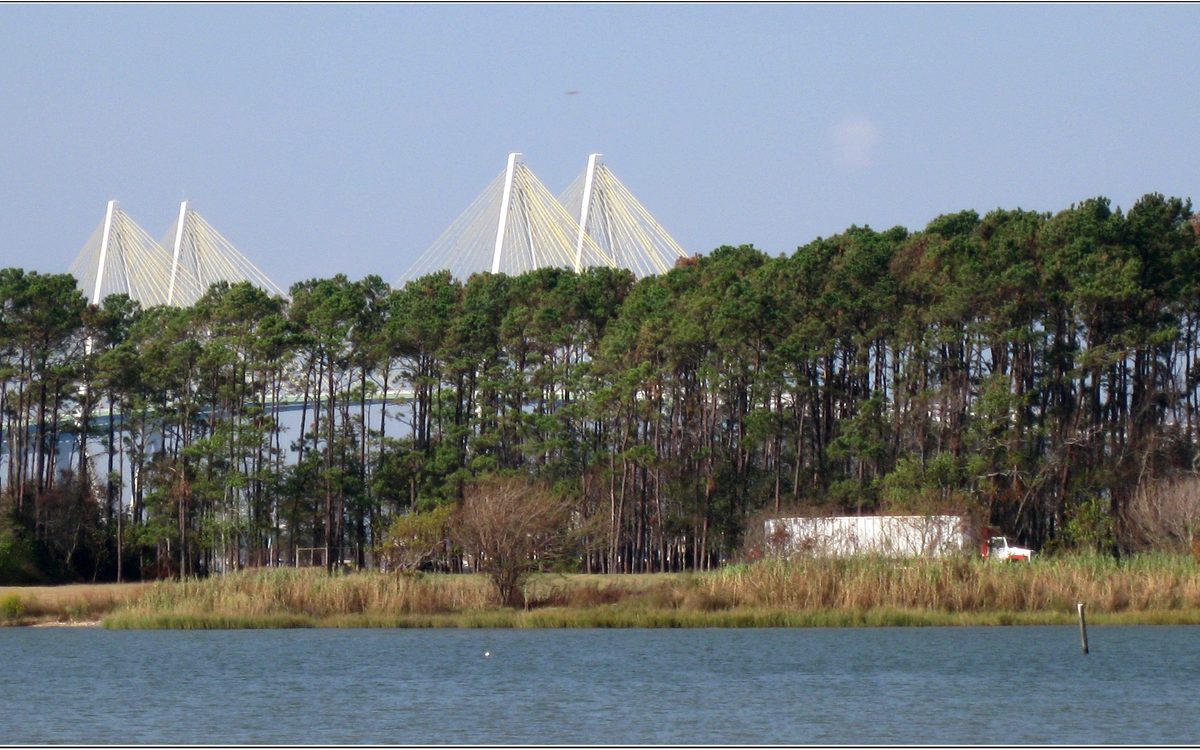
Now think about what this town is, in those terms. Baytown is a pattern. It is a very particular arrangement of pipe and street and school and shift schedule that has held for about a hundred years, and it did not arrange itself. Every piece of it was put there by someone who is now, mostly, a name on a stone or no name at all. The channel was dredged and opened in 1914, by hand and by dredge, by people who did not get to name it. The refinery was laid out in 1919 by crews who lived close to the work in whatever housing there was. The units that made the hundred-octane in the war were run around the clock by men and women, and it would be strange if some of their grandchildren were not on the units now; I have not counted, but the surnames on the badges and the surnames on the older stones overlap. The ferry at Lynchburg has crossed the channel for longer than anyone alive can remember, and crosses it free, in a few minutes, and every crossing is a person on a boat. The school district carries the name of a creek that was drilled by people whose photographs, if they exist, are in somebody's drawer. Everything you can see from the pier at Bayland Park, the bridge and the stacks and the flare and the tankers sliding under the bridge, is the visible residue of work done by people who are not here to be thanked.
What does a town owe them? Not gratitude exactly; gratitude is cheap and they cannot spend it. The debt is more like the debt you owe to a shift that came before yours. When you walk into a control room at six in the morning, the person leaving hands you the unit in whatever state it is in, and everything they did or did not do for the last twelve hours is now yours to live with. You do not thank them. You read the log. You check the readings. You take the thing they kept running and you keep it running, and at six in the evening you hand it on. A continuous process runs on that ethic and no other, and it is, when you look at it plainly, an ethic of remembering: the log is a memory, the procedures are a memory, the scars on the old pipe rack where something went wrong once are a memory, and the reason you read all of them is that the people who wrote them were paying attention on your behalf before you existed.
A town is a continuous process too. It gets handed on shift by shift, generation by generation, and the ones who built it are in the log. Their entries are the streets, the stones, the name on the water tower, the Spanish and the English side by side on the storefronts on Texas Avenue. To remember them is to read the log. To pay them is to keep the thing running and hand it on in at least as good a shape as it came to you. There is no other coin they would accept.
The ofrenda understands this better than the memorial does. A memorial says: this person mattered, and here is their name. An ofrenda says: this person is coming to dinner, and here is what they liked. The second is more demanding. It requires you to know the person, not just the name, to know that she took her coffee with too much sugar and that he would not eat anything green and that the little one liked a particular candy that is hard to find now. It keeps the pattern, not the label. A town that wants to pay its debt properly would do well to keep its dead the way an ofrenda does: not as a list of founders on a plaque but as a set of habits and stories and ways of doing things that are still, visibly, in use. The operator who insists on walking the unit before he trusts the board learned it from someone. The nurse on Garth Road who talks to the patient before she reads the chart learned it from someone. The way the whole town shows up on the curb for the parade the first Thursday of December was learned from someone. Those someones are at the table. They are eating.
Carl Sagan's line, that we are a way for the cosmos to know itself, is usually read as a line about telescopes. It is also a line about this week. The universe, on its own, does not remember. Stars burn out and their material goes into other stars and there is no one to lay a marigold path for the old one. But on one small, damp, chemical-smelling stretch of a bay on the Gulf coast, a few tens of thousands of people are spending two days holding in mind the exact shapes of people who are not here anymore, the specific, unrepeatable arrangements of carbon that were a mother, a foreman, a kid. That is the cosmos remembering itself, through us, one candle at a time, and as far as anyone has been able to tell, we are the only part of it that does.
The bay does not do it. The bay took Brownwood and made it a marsh, and the herons are there now, and the tide moves in and out over what used to be somebody's driveway with no opinion at all. The bay is the thing that does not remember, and that is why we stand at its edge to do it for ourselves. Late on the second night, when the marigold petals have been tracked all through the house, somebody goes out on the porch for air, and the wind is off the water, and across it the plant is lit up the way it always is, every light on, running on a shift that was handed to it by people who are, tonight, expected home. Then she goes back in. The candles on the table have burned down to the last inch, the glass of water has a skin of dust on it, and the plate of food is where it was set, untouched, which is how it is supposed to be, because the guests do not eat the food. They eat the smell. Whatever is left of them, they were fed.