
The buses are out again. You notice them before you notice anything else about the week, the yellow noses pulling out of the lots at first light, the flashers, the traffic on Garth Road stacking up behind a stop arm that has not been seen since May. The mornings are still hot, hotter than anyone likes, and the kids at the corner stand in the shade of a mailbox with backpacks that are clean for exactly one day. Somewhere a mother is taking a picture on the porch and the child is not smiling in it and both of them will love it in ten years. That is back to school in Baytown. It happens the way the tide happens. Nobody votes on it.
Three high schools open their doors that morning on this side of the line: Ross S. Sterling, Robert E. Lee, and Goose Creek Memorial, all of them Goose Creek CISD, a district that takes its name from the creek, and from the oil town on the creek that was here before Baytown was. Up the highway in Mont Belvieu, Barbers Hill opens too, on top of the salt dome. Between them they hold most of the area's teenagers, which is to say most of the area's next thirty years, and they hold them in the same buildings, on the same schedule, for four years, and then let them go.
I want to think for a while about what walks in on that first morning, because it is easy to see a high school as a place where children are kept and hard to see it for what it is, which is the most consequential process running in the county. The plants on the channel take something raw and, with heat and pressure and time, turn it into something the world can use. A school does the same thing with a person. It is slower, and it is louder, and the product argues back. But it is the same shape of work, and it is done by the same town, with, in large part, the same money.
A plant has a number for everything that goes in at the gate: a pressure, a temperature, a percent. A high school on the first morning has a roster, and the roster has names on it and almost nothing else. A fourteen-year-old walking into Sterling is a name and a date of birth and a schedule printed the night before, and every reading that will matter, what she can do, what she will not do, what she is afraid of and what she is good at that nobody has told her yet, is blank. That is the strangest thing about the process the town runs in those buildings: the raw material walks in unlabeled. The teachers are the operators, standing at the board, watching for the first readings, adjusting, and it takes them most of a semester to know what they have. Four years later the roster is the same list of names with, in most cases, a different person attached to each one.
The town does not usually talk about its schools this way. It talks about them the way every town does, in terms of football and test scores and which one you went to, and that is fine; that is how a town loves a thing. But the plant vocabulary fits, and it fits because of where the money comes from. The tank farms and the towers and the pipe racks on the channel are taxed, and the taxes fund the districts, and the districts fund the chalk, or the whiteboard markers that replaced it, and the bus fuel and the teacher's salary and the air conditioning that lets anyone think in August. A student walking into Goose Creek Memorial on the first morning is walking into a building that the refinery, in a literal and unmysterious sense, helped pay for. The same is true, up the road, of Barbers Hill, which sits over the largest underground store of natural gas liquids in the country and has the facilities to show for it. The salt under the school pays for the school, and you can find the line for it on a tax statement.
Even the bus is part of the loop, if you follow it far enough. The diesel in its tank was refined somewhere on this coast, and it is not unlikely that it was refined a few miles from the stop, on the same channel, by a parent of someone on board. The fuel burned to bring the child to the building came from the plant that paid for the building, and the child is being brought there, in part, to learn the chemistry of the fuel. Nobody designed that. It is what happens when a town's one big thing is close enough to touch everything else.
What comes back the other way is the part worth watching. Walk the halls of any of the three and you will hear two languages, sometimes in the same sentence. About half the households in Baytown speak Spanish at home, and the first day of school is the morning when that fact is most audible: parents at the office window, an older sister translating a schedule, a coach who switches without thinking. The plant gate at shift change sounds the same. The town has been bilingual on the fence line for as long as there has been a fence, and the schools are where the two languages are braided together in the next generation, deliberately, on purpose, with worksheets. That braid is the town's real product. The refinery makes fuel. The schools make the people who will run it, and nurse at the hospital on Garth Road, and teach in the same rooms, and leave for Austin and Clear Lake and come back, or not.
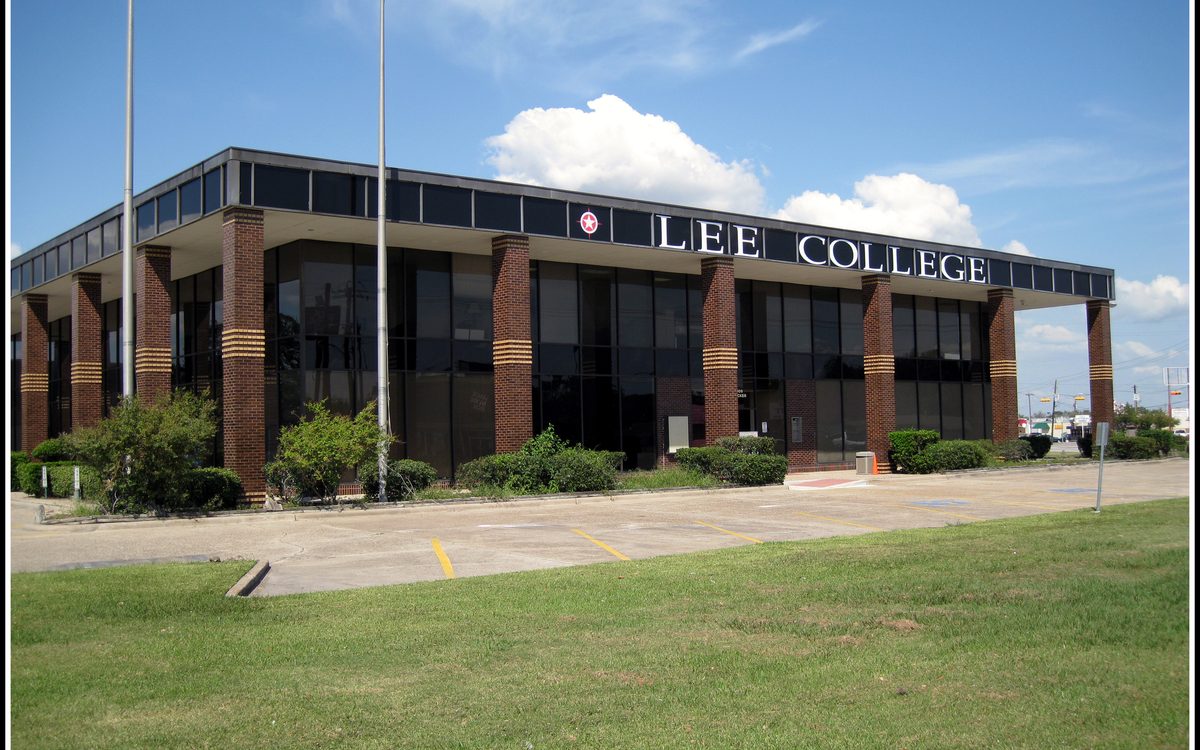
Baytown differs from most places its size in one respect that matters on the first morning: a kid who wants to stay can. Not every kid does, and nobody should have to, but the pathway is real and it is short. Lee College is in town. It runs programs that feed directly into the plants, and a student can go from a cap and gown on a June evening to a two-year credential to a badge at a gate without ever leaving the zip code. There are teenagers in those buildings on the first morning whose great-grandfathers worked the refinery during the war, when it made the aviation gasoline that flew the bombers, and whose parents wear a badge now, and who will wear one themselves. There are others who will go the other direction entirely, to the space center forty minutes down the road, or to a hospital in the medical center, or to a classroom in another state, and the plants will have paid for their start too. The town does not get to keep them. It only gets to make them.
I think about what the first morning looks like from the other side of the desk. A teacher at Lee has stood at that door on that morning for years and watched the same thing happen every time: a hundred and fifty strangers walk in, most of them frightened in ways they would die before showing, and by the end of the week she knows which ones read at night and which ones are hungry and which one is going to be a problem and which one is going to be a problem worth having. She is the operator on the tower. She sees the readings first. She calls things in. She is paid, by any reasonable measure, less than the process she runs is worth, and she comes back in August anyway, with the room set up the week before and the names on the seating chart already half memorized from the list, though she knows the chart will be wrong by Friday.
The plants understand a thing about time that the schools understand too, which is that the process does not stop for the calendar. A refinery does not close for summer. Neither, really, does a school; it only changes shape. The building goes quiet in June and the kids scatter to Pirates Bay and the beach and jobs and couches, and then in August the whole thing starts again on the same day for everyone, and the town resets its clock by it. Shift schedules bend around it. The traffic on Garth Road changes. The grocery store fills with binders. Turnaround season and the first day of school are the two events that move this town's population and its rhythm most visibly, and only one of them has a pep rally.
There is a picture I carry of what the morning looks like from the highway. You are coming in on 146 from the bridge, early, and the plant is beside you with its lights still on and the flare small and steady, and a few blocks in, the lots are filling with cars that are too old for the kids driving them, and buses are turning in, and the whole east side of the county is doing the same two things at once: making energy and making people. Nobody has arranged this. It is only what the town does, in the order it has always done it, first the field, then the refinery, then the schools the refinery paid for, then the students the schools sent back, then the field again. A circle, closed, that runs on oil and turns out people.
In a chemistry classroom at Goose Creek Memorial on the first morning, a teacher is going to stand in front of thirty kids who grew up in a town with an ethylene plant in it and explain, for the first time in most of their lives, what ethylene is. Two carbons, four hydrogens, a double bond. The same molecule that ripens a peach and the same one the towers make by the ton. Some of them will forget it by lunch. One or two will not, and those are the ones who will one day sit in the control room, or in a lab, or in a clinic, and be the part of the town that understands what the town is doing. You cannot tell which ones from the door.
The first bell rings and the hallway empties in the way only a hallway of teenagers can, all at once and with too much noise. Out on the road the last bus pulls its stop arm in. Across town the flare leans in the morning breeze and holds. In the window of a classroom on the second floor a girl who did not want to be in the porch photograph is looking east, toward the towers, not thinking about them at all yet. She will.

.jpg)