The first Monday of September is a holiday in most of the country because, in the summer of 1894, Congress made it one, and the reason it made it one is a long story about railroads and strikes and a president who needed to say something to working people in a hurry. That is where the day came from. Here it is the last long weekend before the heat breaks, one of the last weekends the water park is open, the smell of somebody's brisket coming over a fence at nine in the morning because it has been on since two. Here Labor Day is mostly quiet, which is the one thing labor in this town almost never is.
Because the thing about a labor holiday in a labor town is that the town does not take it. The plants on the channel run on the first Monday of September the way they run on every other Monday. Somebody is on the tower. Somebody is in the control room watching the screens. The units that make the fuel and the plastic and the feedstock for a thousand things nobody thinks about do not know it is a holiday, and the people who run them have arranged their lives around that fact for a hundred years. The barbecue on the holiday is for the ones on days off. The ones on shift will have theirs on Wednesday.
I want to be plain about what the word labor means in a place like this, because it means something more exact than it does in a speech.
In most towns, work is a thing people do. Here it is what the town is. Baytown exists because an oil field was found under Goose Creek and a refinery was built to take what came out of it, and the refinery drew the people, and the people built the streets and the churches and the schools around the fence. There was no town first and industry later. The town is the shape the work made. Everyone who lives here lives inside that fact, whether their badge opens a plant gate or not. The nurse at the hospital on Garth Road, the teacher at Sterling, the man selling tacos out of a trailer at shift change, the woman who runs the hotel desk, all of them are downstream of the fence. When the plants are busy, the town is busy. When they are not, it feels it.
Nowhere is that clearer than in a turnaround.
A turnaround is what a plant calls the weeks when a unit is taken down, opened up, inspected, repaired and put back. It is planned years ahead. It cannot be avoided, because pipe wears and catalyst dies and vessels have to be looked at from the inside by someone with a flashlight and a certification. And it cannot be done by the people who run the plant, because there are not enough of them and it is not their trade. So it is done by people who come. Welders, pipefitters, scaffold builders, insulators, electricians, inspectors, crane operators, safety watchers, the ones who hold the fire extinguisher and the ones who hold the clipboard. A few thousand of them arrive for a turnaround, and for a few weeks the town is bigger than it was.
You can see them if you know what to look for. The hotels along the highway fill up, and so do the RV parks, and the trucks in the lots have plates from Louisiana and Oklahoma, and Texas plates on trucks that came up from the Valley. The breakfast places open earlier. Traffic on the road to the gate at five in the morning turns into a line of headlights that does not end. And then the unit goes back up, the scaffolding comes down, the trucks pull out, and the hotels empty until the next one. The town breathes in and breathes out. That rhythm, the fill and the empty, is as much a part of Baytown as the tide.
The turnaround crews are the labor in the labor town at its most visible. They are also the part of the story that does not fit the speech. They are not, most of them, from here. They do not, most of them, stay. They follow the work from the channel to the Louisiana coast to the refineries up north, a few weeks here, a few weeks there, living out of a truck and a hotel room and sending the money home. It is hard, hot, dangerous work done by people who are paid well for it and know exactly what it costs. Nobody makes speeches about them. They are gone before the speeches start.
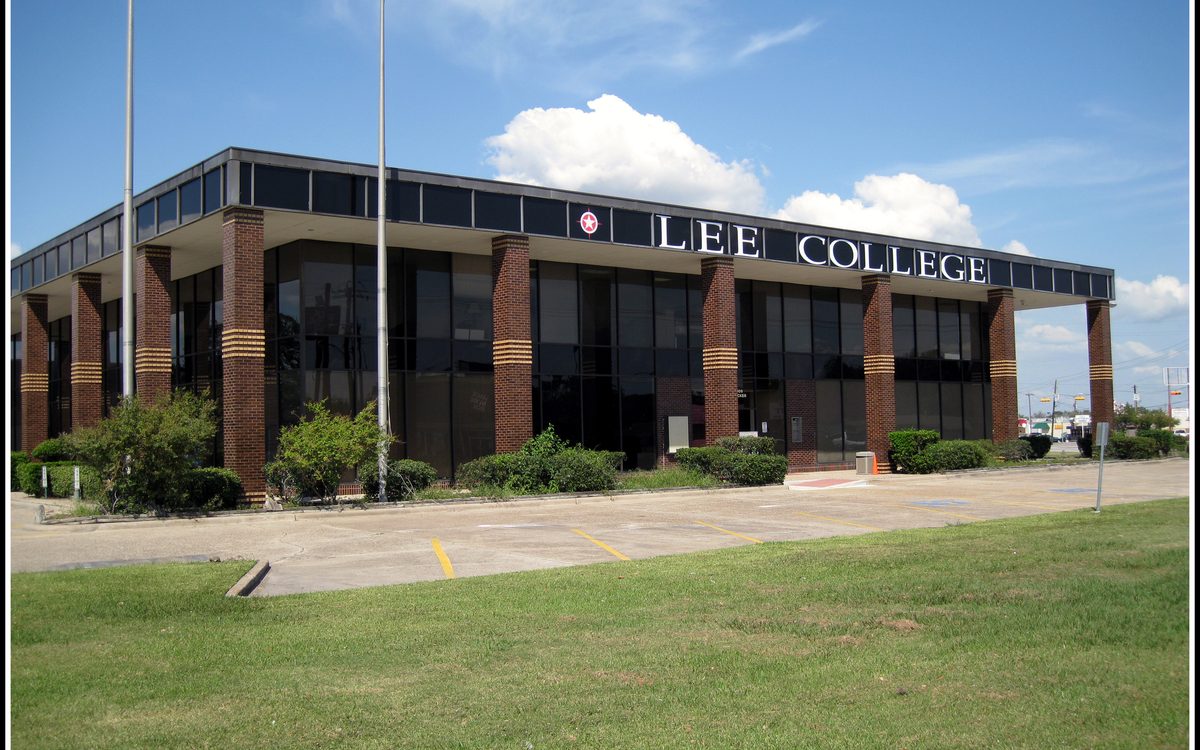
There are halls in the region where the trades meet, where apprentices are trained and dispatched, where a welder learns the difference between a good bead and a bad one from someone who has run a thousand of them. There are also plenty of hands who came up without a hall, who learned from a foreman or an uncle or a two-year program at Lee College. I am not going to pretend to know the exact map of who belongs to what. What I know is that every one of those hands, hall or no hall, is doing the same thing on the tower, and the tower does not check the card.
Consider one job on that scaffold, the least glamorous one there is. When a vessel is opened and a person goes inside, someone else stands at the manway and does not go in. The attendant keeps a count of who is inside, watches the air monitor, keeps the radio, and does not leave the hole for any reason until everyone who went in has come out. Hours of it, in the sun, doing what looks to a passing supervisor like nothing. It is the purest form of the town's work. Somebody is being paid to keep looking at a thing so that somebody else can stop looking and get on with theirs.
The word for what the attendant is doing is older than the holiday by a couple of thousand years, and it started out meaning almost exactly that.
Aristotle, sitting in Athens a very long time before anyone cracked a molecule, needed a word for something he saw everywhere and had no name for. He was looking at the difference between a thing that could do something and a thing that was doing it. A seed that could become a tree. A builder who could build a house, and one who was building it. He put together a word out of the ordinary Greek for "in" and "work": energeia. Being-at-work. Actuality. A thing fully being what it is by doing what it does. The word came down through Latin and French and landed in English as energy, and then the physicists took it and gave it a number and a unit, and now it means the thing in the barrel and the thing in the battery and the thing on the bill.
But the physicists kept the old meaning inside the new one, whether they meant to or not. Ask one what energy is and, after some hedging, they will tell you it is the capacity to do work. Work. Force through a distance. A joule is a newton pushed a meter. The whole cathedral of thermodynamics is built on a word a welder would recognize.
So consider what is happening when a crew takes a unit down and puts it back. A vessel is opened. A man goes inside with a light. Steel is cut and steel is welded, and the welding is an arc of electricity hot enough to melt iron, and the electricity came from a turbine, and the turbine, as often as not in Texas, burned gas, and the gas came up a well in a field a few hundred miles off, where it had sat in the rock since long before anyone was around to want it. The well becomes the turbine becomes the arc becomes the weld becomes the pipe becomes the unit that will run for another several years, taking other gas and other crude apart and putting them back together as fuel that will move other things. Every step of that is energeia in Aristotle's sense and energy in the physicist's sense at once. It is being-at-work all the way down.
And the man with the light is part of it, the piece the speech leaves out. A human being at rest gives off heat at about the rate of a light bulb, a hundred watts or so, and a human being at hard work, a welder in a suit in August on a scaffold, several times that. He is burning what he ate the way the turbine burns what it was fed. He is a small heat engine standing inside a very large one, doing the one thing the large one cannot do for itself, which is decide. Look. Judge. Say this weld is good and this one is not. Say stop.
That is what labor is, exactly, in a place that makes energy. It is not the opposite of the machine and it is not a part of the machine. It is the machine's capacity to know what it is doing. Take away the pipe and the plant is a field. Take away the people and it is a very expensive sculpture that will, sooner or later, catch fire. The whole thing runs because somebody is at work inside it, in the old sense, the Greek sense, fully being what they are by doing what they do.
I have talked to operators who would laugh at that paragraph. They would say they are there for the money and the schedule and the fact that their father did it. That is fine. Aristotle did not require that the builder think about the word while building. The point was that the building is the thing, not the thought.
On the holiday, then, the town does the small honest thing it can do, which is to stop for a day, most of it, and eat. The part that cannot stop does not. Somewhere on the channel a night-shift operator walks the unit at three in the morning of the first Tuesday of September, checking gauges that have not heard of the holiday, and above him the flare is quiet, which means the plant is well. Below him, in the dark, is a town that was built by people doing exactly what he is doing, and that will be here, if it is here, because people keep doing it. The heat has not broken yet. It will. He finishes the round and goes back inside, and out past the fence, on a street of dark houses, one backyard has a smoker going at three in the morning, a small orange light of its own, for somebody whose holiday is tomorrow.